Mushroom and Barley Skillet: Combine a Cooked Grain with a Separately Prepared Topping
Cooked barley can support a mushroom-and-vegetable skillet without requiring both components to finish at the same moment. Read the grain package and use a suitable mushroom preparation method. This is an illustrative meal framework, without invented testing or a guaranteed cooking time.
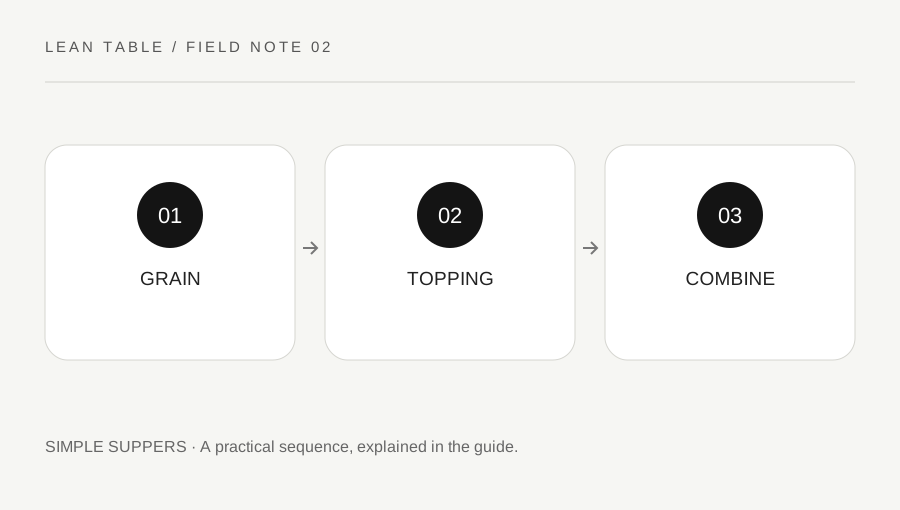
Original explanatory diagram. Examples illustrate a method or decision; they are not claims of personal testing.
Identify the barley and mushroom forms
Pearled barley, quick-cooking barley and a ready-cooked pouch can need different preparation. Follow the actual package rather than transferring a water ratio from another form. Barley contains gluten, so do not label this meal gluten-free. Check all additional ingredients for relevant dietary needs.
For two example portions, plan roughly 300 grams safely prepared cooked barley, 250 grams cultivated mushrooms and a suitable vegetable such as peas or spinach. These amounts are adjustable assembly quantities, not a nutrition target. Use purchased identified food mushrooms; this article is not a wild-mushroom identification guide.
Prepare the grain by its instructions
Cook dry barley using its supported package or recipe method, or prepare a ready-cooked product as directed. Keep any standing time and handling instructions. If using a refrigerated cooked grain, confirm its safe history and use appropriate leftover reheating guidance.
Do not leave cooked grain on the counter while you begin an unrelated long task. Keep the service plan manageable and refrigerate perishable leftovers promptly. A grain can look dry while still needing proper food handling, so appearance is not a substitute for storage history.
Make the mushroom component separately
Prepare cultivated mushrooms according to suitable food guidance and the chosen cooking method. Use a pan appropriate to the amount, with a controlled quantity of oil or other recipe ingredient. Add the accompanying vegetable under its own package or recipe instructions.
Avoid crowding the pan merely to force every component into one stage. The goal is a prepared topping you can combine with the grain, not a promised restaurant-style browning result. Keep raw-meat utensils away from the vegetables and finished meal.
Combine and adjust the final texture
Add the prepared barley to the cooked topping using a suitable method. A small amount of an appropriate liquid can help combine the components if the supported method allows it. Avoid adding a large volume that changes the meal into an unplanned soup.
For a worked two-portion plate, divide the combined mixture into two shares and add a preferred ready-to-eat finishing ingredient, such as chopped herbs prepared safely. Check actual seasoning ingredients and allergens. The meal does not need to match an exact gram target to be a useful supper idea.
Keep a repeatable component note
Record the barley form, package method and vegetable combination after an actual preparation. A ready-cooked pouch and a dry-grain batch can produce different starting conditions, so keep that distinction in a repeat plan.
Cool and refrigerate leftovers promptly under official guidance and reheat appropriately. Do not infer safety from a pleasant smell or use reheating to rescue uncertain storage. This original meal framework explains component order and ingredient choices rather than claiming a tested universal skillet recipe or a health outcome.
For a repeatable component card, write the cooked-grain amount separately from the dry amount the package used. Three hundred grams cooked barley is not the same instruction as three hundred grams dry barley. Record the product and its preparation yield only after an actual batch. List the mushroom and vegetable topping as another component with its own method. If the combined skillet is wetter than you prefer, inspect which component introduced liquid before changing everything. A grain cooked to the package method and a watery topping are separate observations. This makes the next adjustment specific and avoids turning a flexible supper idea into an unsupported universal ratio.
A practical checklist
Choices are saved in this browser. Reset them here or clear this site’s browser storage.
Questions that come up
Is barley gluten-free?
No. Do not label a barley meal gluten-free. Choose an appropriate different verified recipe if a dietary restriction requires it.
Can I use any mushroom I find?
No. Use purchased identified food mushrooms. This meal guide does not identify wild species.
Does the guide supply one cooking time for every barley?
No. Follow the actual form’s package or a suitable verified recipe, including any standing and handling instructions.
References & scope
Background references checked on 18 October 2026. Worked examples and diagrams are original teaching material.